





- FT. ON COOL HUNTING
4.76 out of 5.0
Truegrit (100% Robusta)
- 🔥 Medium
- 🤤 Extra Strong, Bold, Hazelnuts & Zest
- ☕️ Drip, Phin Filter, French Press

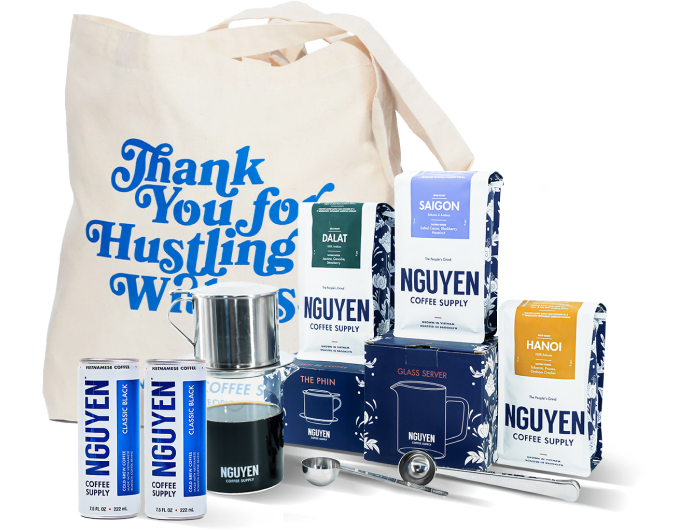
Create for yourself or as a gift for your loved ones
Subscribe nowMe and mom just enjoyed the Nguyen phin drip experience. Wow. Proud of your work. We without hesitation enjoy the Vietnamese coffee and recommend your products. Thank-you to the Nguyen staff and tradition. From Canada eh!

I get asked about roast levels almost as often as I get asked about the phin filter. People assume darker means stronger, lighter means weaker, and that's the end of the story. It's not. Roast level and caffeine strength are two different things, and mixing them up is the single most common misunderstanding I hear about Vietnamese coffee.
As the founder and Head Roaster at Nguyen Coffee Supply, I've developed every roast profile we sell. This guide covers what roast levels actually mean, why Vietnamese coffee has a reputation for running dark, and how to pick the right roast for the way you actually brew.

There are four commonly recognized roast levels: light, medium, medium-dark, and dark.
Light roast beans are light brown and pulled off the roaster early, before much of the bean's oils surface. They keep more of the acidity and origin character of the raw bean, so you taste more of where the coffee actually came from.
Medium roast beans are roasted a bit longer. The flavor shifts toward caramel and light fruit, acidity drops, and the bean's origin character softens.
Medium-dark roast beans develop a fuller body and more pronounced bitterness. Sweetness and acidity both decrease, replaced by toasted, caramelized notes.
Dark roast beans are roasted long enough that the oils rise to the surface, giving the bean a shiny, almost black look. Acidity is minimal at this stage, and the bean's original character is mostly gone, replaced by the roast itself.

Most Vietnamese coffee, historically and today, is roasted medium-dark to dark, sometimes into full French roast territory. There's a real reason for that, and it's not just preference.
Traditional Vietnamese roasting coats the beans in butter, sometimes with a touch of oil, before they go into the roaster. This is often called a butter roast. Coating the bean this way helps it roast more evenly at the deeper levels Vietnamese coffee culture favors, and it adds a rounder, slightly savory depth to the final cup. It's genuinely rare to find real butter-roasted coffee outside Vietnam today; most large commercial roasters won't put butter through their equipment.
The other reason is the bean itself. Vietnam is the world's second-largest coffee producer, and the vast majority of what it grows is robusta, not arabica. Robusta holds up better to a darker roast: it has a thicker cell structure, less delicate flavor to lose, and a naturally bold, earthy profile that a deep roast doesn't overwhelm the way it can with a lighter-bodied arabica bean. Combine that with phin filter brewing, which is designed to pull a concentrated, syrupy shot that stands up to sweetened condensed milk, and a dark roast becomes the practical choice, not just a stylistic one.

This is the part that trips up almost everyone, including coffee drinkers who've been at this for years.
The longer you roast a bean, the more caffeine it loses. So counterintuitively, a dark roast is usually slightly lower in caffeine than a lighter roast of the exact same bean. What actually determines a coffee's strength is a combination of two things: the bean itself, and the roast level applied to it.
Robusta beans naturally contain close to twice the caffeine of arabica beans before either one is ever roasted. That means a medium roast robusta will out-caffeinate a dark roast arabica every time, even though the arabica looks and tastes “stronger” on the shelf. If you want a genuinely high-caffeine cup, look at the bean type first and the roast level second.
Phin filter: Vietnamese coffee's traditional brewer produces a concentrated, slow-drip cup, and it's built for medium-dark to dark roasts. A dark roast robusta is the traditional pairing, especially if you're adding sweetened condensed milk.
French press: A full-bodied brew method that handles medium-dark and dark roasts well. The immersion process pulls out the deeper, heavier notes those roasts are known for.
Pour over or drip: These methods let acidity and origin character shine, so light to medium roasts tend to perform best if that's what you're after. A medium roast can also work well through a phin if you want a less intense cup than the traditional dark roast delivers.
Espresso: Traditionally a dark roast, for the same reason phin brewing favors dark roast: concentration and body hold up better under pressure and dilution (with milk, water, or ice) than a lighter roast does.
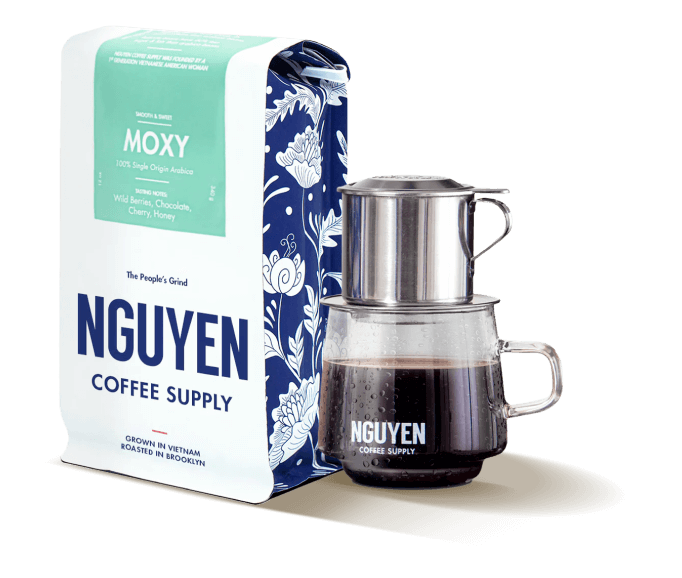
We roast both ends of the spectrum here in Brooklyn. Our original trio, Truegrit (100% robusta), Loyalty (a robusta and arabica blend), and Moxy (100% arabica), is roasted medium, with the robusta content doing most of the work to deliver the bold, dark-tasting cup people expect from Vietnamese coffee. For drinkers who want to go further, our dark roast lineup pushes into deeper, more traditional territory built specifically for phin brewing.
If you're not sure where to start, the roast level matters less than getting the bean type right for how you actually brew. That's the real decision.

Most Vietnamese coffee is roasted medium-dark to dark, sometimes into full French roast. This is partly tradition (deep roasts pair well with phin brewing and condensed milk) and partly practical: Vietnam's dominant bean, robusta, holds up well to a darker roast without losing its character the way a lighter-bodied arabica bean can.
No. Dark roast is the most common and traditional choice, but medium and even light roasts exist, especially as more specialty roasters experiment with Vietnamese arabica. The bean and the roast are chosen independently, so a full range is out there if you look for it.
Not in terms of caffeine. Longer roasting actually reduces a bean's caffeine content. Darker roasts taste bolder and more intense, but a medium roast robusta will typically have more caffeine than a dark roast arabica, because robusta naturally contains close to twice the caffeine of arabica before either bean is roasted.
Traditional Vietnamese roasting often coats the raw beans in butter, sometimes with a touch of oil, before roasting. This is known as a butter roast. It helps the beans roast more evenly at the deep levels Vietnamese coffee culture favors and adds a rounder, slightly savory depth to the finished cup. It's uncommon outside Vietnam today, since most large commercial roasters do not use butter in their equipment.
Medium-dark to dark roast is the traditional choice for phin filter brewing. The phin produces a slow, concentrated drip, and a deeper roast holds up to that concentration, along with the sweetened condensed milk traditionally served with it.
Yes, though it's uncommon. Light roast is rare in Vietnamese coffee culture, but nothing about the bean itself prevents it. The reason why light roast is rare in Vietnamese coffee culture is because Vietnam's coffee culture is dominated by the robusta bean; due to the naturally bold character of the robusta bean (with 60% less fats and oils compared to arabica), a light roasted robusta bean tastes very different from a medium to dark roast robusta bean, and robusta generally needs more time and heat to bring out its unique flavor characteristics. A light roast Vietnamese arabica will taste brighter and more acidic, closer to what specialty coffee drinkers expect from a light roast anywhere else in the world.


